
"coffee export standards"
5000 article(s) found

Laos coffee is the only deep inland volcanic plateau coffee with a unique, mellow and full-bodied taste.
Boutique coffee (specialty coffee) is also called specialty coffee selection coffee. It refers to coffee made from a small number of raw beans with excellent taste grown in an ideal geographical environment. Depending on the special soil and climatic conditions in which they grow, they have outstanding flavor. After strict selection and classification, this kind of coffee is hard in texture, rich in taste and stylish.

Peruvian Coffee Market Peruvian Coffee Export Peruvian Coffee quality
Peruvian coffee market: the private Peruvian Coffee exporters Association (ComeradeExportadoresdeCafedelPeru) has been established, which is committed to improving the quality of coffee, and its primary task is to set standards and eliminate inferior products, thus creating an atmosphere of quality supremacy. This positive move heralds a bright future for the coffee industry. After that, as prices rose, farmers were also encouraged.

The development of coffee in Laos
Coffee in Laos has gone through a lot of development in the past 20 years. The speed of development in the past 20 years is faster than that in the past 80 years.

A brief introduction to the treatment method of grinding degree and baking degree of medium-grain Vietnamese boutique coffee beans
In addition, there are many enterprises with inadequate equipment, which only rely on a few stand-alone machines for processing, and purchase newly processed coffee from farmers to ensure export standards. The coffee purchased from the private sector is mainly handled by each farmer through the cement yard or soil yard. Farmers in many places use small grinders to grind dried coffee fruits into coffee kernels and sell them to coffee buyers. This kind of processing

The magic of Lao coffee
Coffee in Laos has gone through a lot of evolution over the past 20 years. The pace of development in the past 20 years has exceeded that of the past 80 years.
Common sense of graded coffee to distinguish between coffee beans and coffee beans
● distinguishes the key names and specifications of coffee beans the name of the port of export of ● can tell the shipping route from the name of the port of exit marked. Coffee from the same origin or the same brand has a certain route, so it is also exported from the same port. For example, if it is marked as "Brazil. Santos", it means that this is coffee exported from Santos, but the one marked "Mocha" is taken as an example.
Fine coffee beans: teach you to distinguish coffee beans and coffee beans graded coffee basics
● Key to distinguish the name and specification of coffee beans ● Export port name From the indicated export port name, you can know the route of transportation. Coffee of the same origin or brand has a certain route, so it is also exported from the same port. For example, if the label is "Brazil." Santos "means it's coffee coming out of Santos, except when it's marked mocha.

Coffee bean producing countries have a strict grading system, what are the specific standards?
Professional coffee knowledge exchange more coffee bean information please follow the coffee workshop (Wechat official account cafe_style) Brazil classification system also includes the size of beans
Fine Coffee Coffee name and Brand
National place name: indicates the area where coffee is produced. For example, Ethiopia. Harald shows that the product is produced in Harald, Ethiopia. It should be noted here that the name of the country is the same, but when the region and year are different, the quality of coffee is different, and the taste of coffee is not guaranteed to be consistent. Port of export: indicates the port of export of coffee. Coffee of the same origin and brand in the same place.
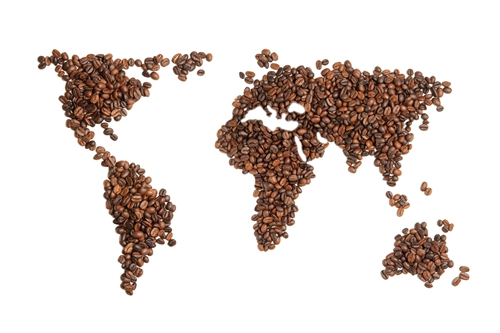
Pu'er Coffee fragrance "Belt and Road Initiative" Chinese Coffee producing area Yunnan small Coffee
Pu'er is known not only as the tea city of China, but also as the coffee capital of China. Coffee industry has become one of the characteristic agriculture in Pu'er plateau and an important pillar industry in the construction of national green economy experiment and demonstration zone. With the east wind of Belt and Road Initiative, coffee carries the dream of Pu'er people to the world. The cultivation of Pu'er coffee began at the end of the 19th century, and its industrialization began in 1988.
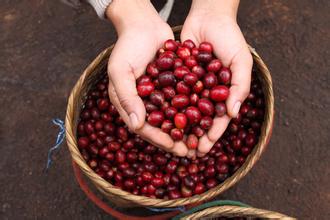
Distinguish coffee beans and the grading of coffee beans how to distinguish the quality of coffee beans coffee knowledge
● distinguishes the key names and specifications of coffee beans the name of the port of export of ● can tell the shipping route from the name of the port of exit marked. Coffee from the same origin or the same brand has a certain route, so it is also exported from the same port. For example, if it is marked "Brazil." "Santos" means that this is coffee exported from Santos, with the exception of those marked "mocha".

Introduction to the grading Standard of Fine African beans and Indonesian Coffee Raw beans
Indonesia Manning coffee beans the most famous origin of Asian coffee is the islands of Malaysia: Sumatra, Java and Kaliman. Sumatra manning coffee from the Indonesian island of Sumatra is the most famous, it has two famous names, Sumatra mantenin DP first class and collection Sumatra mantenin. Sumatra Mantenin DP first-class finish
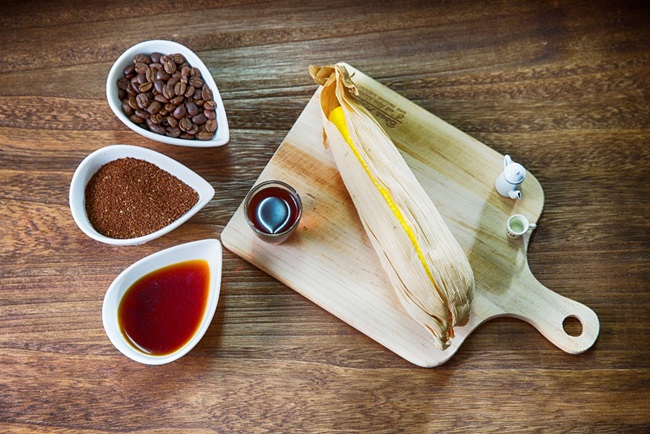
Global Coffee Bean grading system details of Raw Bean grading Standards in Coffee producing countries
For the exchange of professional baristas, please pay attention to the naming methods of coffee in coffee workshop (Wechat official account cafe_style): G1, G2, G3, G4, AA, PB, SHB, SHG, EP, PLANTATION. What exactly does it stand for? The information that may be included in the name of a coffee is: country, producing area, variety, treatment, cup quality, bean order, bean shape or bean color, defect quantity
Explanation of the name and Brand of Fine Coffee Packaging label
National place name: indicates the area where coffee is produced. For example, Ethiopia. Harald shows that the product is produced in Harald, Ethiopia. It should be noted here that the name of the country is the same, but when the region and year are different, the quality of coffee is different, and the taste of coffee is not guaranteed to be consistent. Port of export: indicates the port of export of coffee. Coffee of the same origin and brand is produced in the same place.

Is supremo the Best Coffee Bean? how supre are Columbia supremo Coffee beans?
Professional coffee knowledge exchange more coffee bean information please follow the coffee workshop (Wechat official account cafe_style) Front Street-Columbia Coffee grading system introduction if you have different kinds of Colombian coffee sacks, you will find that each sack will be written Excelso-Caf de Colombia. Whether it's EP,SUPREMO,UGQ, as long as it meets Colombian exports.

Development of coffee cultivation in Laos
Coffee in Laos has gone through a lot of evolution over the past 20 years. The pace of development in the past 20 years has exceeded that of the past 80 years. Coffee in Laos dates back 100 years. France was colonial ruler of Vietnam, Cambodia and Laos, and they began experimenting with various crops in these areas. Coffee soon became available to farmers in Vietnam and Laos

Yemeni coffee flavor and taste Yemeni coffee brands are introduced in Yemeni boutique coffee beans.
Since 2001, Yemeni coffee production has declined year by year due to various reasons. The annual output has dropped from 11906 tons in 2001 to 11608 tons in 2003, 11590 tons in 2004, to about 11000 tons in 2008. In recent years, despite the rising prices in the international coffee market, the coffee industry in Yemen has not boomed, but has shrunk sharply. The main reason for the decrease in coffee production

The Development of Coffee cultivation
Coffee in Laos has gone through a lot of development in the past 20 years. The speed of development in the past 20 years is faster than that in the past 80 years. The coffee history of Laos can be traced back to 100 years ago. At that time, France was the colonial ruler of Vietnam, Cambodia and Laos, and they began to experiment with growing various crops in these areas. Coffee was quickly found in farmers in Vietnam and Laos.

A brief introduction to the Historical and Cultural Development of the Origin of Coffee in Yinshan Manor in St. Thomas, Jamaica
In 1944, the Jamaican government realized the necessity of regulating the blue mountain coffee industry and reformulated three regulatory suggestions for the blue mountain coffee industry: ① concentrated on the processing of blue mountain coffee beans, ② established the blue mountain coffee quality standard, and ③ established CIB, which is responsible for the organization, management of the market and the role of export supervisor. In 1948, the world-famous Jamaican Coffee Agency (CIB) was formally established.
Yunnan Baoshan Coffee Export reaches a New High
Baoshan City speeds up the development of coffee planting industry and continues to expand the export of coffee-based agricultural products.